Strategy & Brand
Choosing a web design agency in Southampton: what to actually look for
How to choose a web design agency in Southampton. What to look for in portfolios, process, pricing, and ongoing support.

If you want a web design agency Southampton businesses can rely on, you need more than just a good looking site.
You need a local team that plans, designs and supports a website built to convert visitors into enquiries and sales. That means clear structure, strong user experience, and digital marketing built in from the start.
Across Southampton and Hampshire, agencies range from specialist studios like boxChilli’s Southampton web design team to full service providers such as Pixel86 in Southampton.
We’ll show you what to look for in portfolios, proposals and communication style, and how to compare options against your goals and budget.
If you’re weighing up freelancer, in house or agency web design, our guide on freelancer in house or agency web design might help you decide.
We’ll also cover red flags, ongoing support, and how to judge value rather than just price, especially if you’re reviewing quotes and wondering how much a website costs in the UK.
As a Hampshire based agency, we see what works locally and where projects lose momentum, so you can choose a design partner with confidence.
Core web design services
We focus on three essentials when delivering web design in Southampton: clear build quality, reliable online selling tools, and layouts that work on every screen.
Each area affects how your site performs, how easy it is to manage, and how well it supports your organisation’s goals.
Bespoke website creation
We design and build websites around how your organisation works, not around a pre-built template.
That starts with structure.
We plan page hierarchy, user journeys, and calls to action before we even open a design file. Our approach aligns with the practical advice in our guide to what to look for in a Hampshire web design agency, including clear processes, defined milestones, and named points of contact.
A strong portfolio should show variety in layout, typography, and functionality.
If every project looks the same, that’s a red flag.
We also define scope carefully. Hosting, integrations, content migration, and training must appear clearly in proposals.
Our article on how much a website costs in the UK explains why transparent pricing matters and how to compare like for like.
Ongoing support matters just as much as launch. We provide update plans and clear communication so your site keeps pace with your organisation.
eCommerce solutions
Selling online requires more than adding a basket icon.
We build eCommerce sites that manage products, stock, shipping rules, and payment gateways without adding unnecessary complexity.
Southampton businesses often need integration with accounting platforms, EPOS systems, or third-party logistics providers.
We plan those connections early to avoid costly changes later.
Performance and clarity drive conversions. Product pages need clean layouts, accurate pricing, and simple checkout steps.
Our practical guide on turning website clicks into customers outlines how small design decisions affect sales.
When reviewing proposals, check:
- Which platform the agency recommends and why
- Transaction fees and ongoing licence costs
- Security and update responsibilities
- Training for your internal team
If an agency avoids these details, treat that as a warning sign.
Responsive design practices
Most users in Hampshire access websites on mobile devices first.
We design for smaller screens from the outset, then scale up.
Responsive design covers more than resizing elements.
We adjust navigation patterns, simplify content blocks, and test forms on real devices.
Page speed, image optimisation, and accessibility standards also form part of our build process.
We encourage clients to ask structured questions before appointing any agency.
Our checklist of questions to ask a web design agency helps clarify how testing, maintenance, and support will work after launch.
It’s also worth weighing delivery models.
Our comparison of freelancer, in-house or agency web design outlines the trade-offs in availability, skill range, and long-term support.
Clear communication, documented testing, and defined support terms protect your investment and keep your website performing well across devices.
User experience and interface focus
Strong UX and UI design reduces friction, improves conversion rates, and supports long term growth.
We focus on structured audits, measurable improvements, and interface decisions that reflect how people in Southampton and Hampshire actually use websites.
UX audit and optimisation
A UX audit reviews how people move through your site, where they hesitate, and where they leave.
We analyse page structure, calls to action, navigation depth, mobile behaviour, and accessibility standards.
A practical audit should include:
- User journey mapping across key conversion paths
- Review of forms and checkout flows
- Mobile and tablet testing on real devices
- Accessibility checks against WCAG guidance
- Page speed and performance insights
We compare findings against your goals, whether that means enquiries, bookings, or product sales.
Conversion improvement isn’t guesswork. It relies on clear data and structured testing, similar to the approach outlined in our guide to turning clicks into customers with better web design.
When reviewing a Southampton agency, ask how they measure success after launch.
Our checklist on what to look for in a Hampshire web design agency covers the questions that reveal whether optimisation continues beyond day one.
Be cautious if an agency focuses only on visuals.
Good UX work should improve clarity, speed, and task completion, not just appearance.
UI trends in Southampton
Interface design in Southampton reflects broader UK patterns, with a focus on clarity and performance.
We see consistent demand for clean layouts, strong typography, accessible colour contrast, and mobile-first design.
Many agencies listed among the top UX designers in Southampton highlight user-centred interface design and front end development as core services.
That matters because design systems, consistent components, and scalable layouts reduce long term costs.
Current UI priorities include:
- Modular design systems for easier updates
- Clear primary calls to action above the fold
- Reduced animation for faster load times
- Inclusive colour palettes and readable fonts
When reviewing proposals, check whether the agency explains why they recommend certain interface choices.
Vague statements about modern design aren’t enough.
Ask structured questions, such as those in our guide on questions to ask a web design agency before you commit.
We treat UI as a business tool, not decoration.
It should guide behaviour, support your brand, and remain practical for future development.
Digital marketing integration
A strong website in Southampton must support search visibility and measurable enquiries.
We structure every build to improve rankings, increase qualified traffic, and turn visits into calls, bookings, or purchases.
SEO-driven website structure
We plan site architecture around real search behaviour in Southampton and across Hampshire.
That means clear service pages, logical URL structures, and internal links that guide users and search engines.
For example, a page targeting web design in the city should sit within a wider service structure, not float on its own.
We also connect related resources such as our guide to web design in Southampton and turning clicks into customers to strengthen topic relevance and user journeys.
Key structural elements we prioritise:
- Clean navigation with no more than three levels deep
- Keyword-focused headings written for humans first
- Fast loading pages with optimised images
- Schema markup where relevant for local businesses
- Clear internal linking between services, case studies, and insights
When reviewing a proposal from a web design agency Southampton, check how they handle site mapping, redirects, and technical audits.
Our checklist in what to look for in a Hampshire web design agency helps you assess whether SEO is built in from day one or added later as an afterthought.
Conversion rate optimisation
Traffic alone doesn’t grow a business.
We design pages to guide visitors towards specific actions such as submitting an enquiry form or requesting a quote.
We focus on layout, copy clarity, and trust signals.
Clear headlines, concise benefit-led text, and visible calls to action reduce friction and improve behaviour on key pages.
Our approach includes:
- Defined primary goal per page, no mixed messages
- Prominent contact details, especially for local service businesses
- Short, usable forms that only ask for essential information
- Social proof, such as testimonials or accreditations
- Mobile-first layouts, since many local searches happen on phones
When comparing freelancers, in-house teams, or agencies, weigh up who will test and refine performance over time.
Our article on freelancer, in-house or agency web design explains the differences in accountability and ongoing optimisation.
Before signing off any build, ask direct questions about measurement, tracking, and iteration.
We outline useful prompts in questions to ask a web design agency so you can judge whether conversion rate optimisation forms part of a long-term plan rather than a one-off launch task.
Portfolio of local projects
A strong portfolio shows how an agency approaches structure, content and performance for real organisations in Southampton and across Hampshire.
We look for clear examples of problem solving, measurable improvements and long term support, not just polished visuals.
Small business website highlights
Many Southampton agencies showcase work for local trades, retailers and service providers.
For example, firms such as boxChilli, a website design and development company in Southampton, present custom business sites built to generate enquiries rather than just display information.
When we review small business projects, we focus on:
- Clear calls to action that guide visitors to book, call or request a quote
- Mobile-first layouts that load quickly on 4G and 5G
- Simple navigation that supports real user behaviour
- Local SEO structure for Southampton and nearby areas
We also check how the agency explains results.
Do they describe the client’s challenge and how the new site improved enquiries or engagement?
If the portfolio only shows screenshots without context, that raises questions.
Our guide on questions to ask a web design agency outlines what to clarify before you commit, including timelines, content responsibility and post-launch support.
Small business websites need ongoing updates, not just a launch date.
Case studies in Southampton
Some agencies publish broader overviews of their work across sectors.
The Southampton Web Design portfolio notes experience with property companies, marketing agencies and manufacturers, even when client names cannot be disclosed due to agreements.
When reading case studies, we recommend checking for:
| What to look for | Why it matters |
|---|---|
| Defined objectives | Shows the project had direction from the start |
| Process detail | Indicates structured planning and collaboration |
| Evidence of results | Demonstrates impact beyond design |
| Ongoing relationship | Suggests reliable long term support |
A credible case study explains the brief, the constraints and how the team handled content, design and development.
It should also make clear who manages updates after launch.
If you compare options, our article on what to look for in a Hampshire web design agency helps you assess proposals side by side.
A well presented Southampton portfolio should give you enough detail to judge capability without relying on bold claims.
Choosing the right design partner
The right web design agency in Southampton will match your commercial goals, work in a clear process, and communicate without confusion.
We focus on fit, evidence of results, and how a team supports you after launch.
Understanding your business needs
Start with clarity about what the website must achieve.
Do you need lead generation for a Southampton service business, online bookings, or a full ecommerce build? Your objectives shape the structure, content, and integrations right from day one.
We always suggest reviewing portfolios with a critical eye. Look beyond the visuals and try to spot conversion thinking, technical depth, and relevance to your sector.
Our guide on what to look for in a Hampshire web design agency gives you some practical checks you can use.
When you’re comparing proposals, look for:
- Clear scope of work, covering design, development, content, and SEO
- Defined deliverables, not just vague promises
- Realistic timelines, with milestones
- Transparent pricing, with context like our overview of how much a website costs in the UK
Be wary of agencies that skip discovery or throw out fixed quotes before learning your requirements. Structure matters too.
Our breakdown of freelancer, in house or agency web design explains how each approach affects accountability and resource depth.
Collaboration and communication process
A decent design partner will explain how they work before you sign anything.
Ask how they run workshops, who your day to day contact is, and how feedback cycles actually go.
We encourage clients to look at a checklist like these questions to ask a web design agency so everyone’s expectations line up from the start.
Good agencies document their process. You’ll want to see stages for research, wireframing, design approval, build, testing, and launch.
Ongoing support matters too, including hosting, updates, and performance tweaks.
Communication should feel structured but still human. Regular check ins, shared timelines, and clear responsibilities help avoid delays.
Ask how they’ll measure success. Traffic isn’t enough on its own.
We focus on enquiries, calls, and sales, and share practical approaches in our guide to turning website clicks into customers in Southampton.
Website launch and ongoing support
Launching a site isn’t just about pressing publish. We test, deploy, monitor, and maintain every build so it performs reliably for businesses across Southampton and Hampshire.
Testing and deployment
We test across current versions of Chrome, Safari, Edge, and Firefox on desktop and mobile. Layout, forms, ecommerce journeys, and page speed all get checked under normal traffic.
Before launch, we review tracking and goal setup so analytics log real enquiries and sales. Clear data is essential when you’re applying advice from our guide on turning clicks into customers in Southampton.
Our deployment process includes a controlled go live window, DNS checks, SSL verification, and backups before any change. We confirm that redirects work and search engines can crawl the site properly.
If you’re comparing proposals from a web design agency, Southampton businesses should ask how launch is handled. Our checklist on what to look for in a Hampshire web design agency shows you what a clear process actually looks like and what to avoid.
Maintenance and security updates
After launch, we keep software, plugins, and server environments up to date. Outdated components can create security risks or slow the site.
We schedule regular updates and test them in a safe environment before applying them to the live site. This protects key functions like checkout, booking systems, or CRM integrations.
Security covers strong passwords, user role controls, malware scanning, and reliable backups stored off site. If something fails, we restore quickly and check what went wrong.
Ongoing support should be spelled out in writing, including response times and what’s actually covered. When weighing up freelancer, in house, or agency web design or reviewing costs in our guide to how much a website costs in the UK, factor in long term maintenance, not just the initial build.
Innovations in web technology
Web technology never stands still, and we see the impact across Southampton and Hampshire projects. Modern frameworks load faster, scale better, and give us cleaner code to look after over time.
We’re building with mobile-first layouts, lightweight front-end libraries, and structured content systems. This improves speed and accessibility while supporting search visibility.
Performance standards are higher now. Google wants fast, stable pages, so we optimise images, reduce script weight, and use reliable hosting.
When clients compare options like freelancer, in-house or agency web design, technical capability often tips the balance.
Security’s moved on as well. We implement HTTPS, secure form handling, regular updates, and sensible permission controls to protect user data.
We’re also seeing more:
- Headless CMS platforms for flexible content delivery
- API integrations connecting websites to CRMs and booking systems
- Accessibility improvements that actually meet WCAG guidance
- Analytics tools tracking behaviour and informing design tweaks
When reviewing proposals from a web design agency, Southampton businesses should check how these technologies fit into the agency’s process. Our checklist on what to look for in a Hampshire web design agency helps marketing managers assess technical depth, communication style, and ongoing support.
Community engagement and events
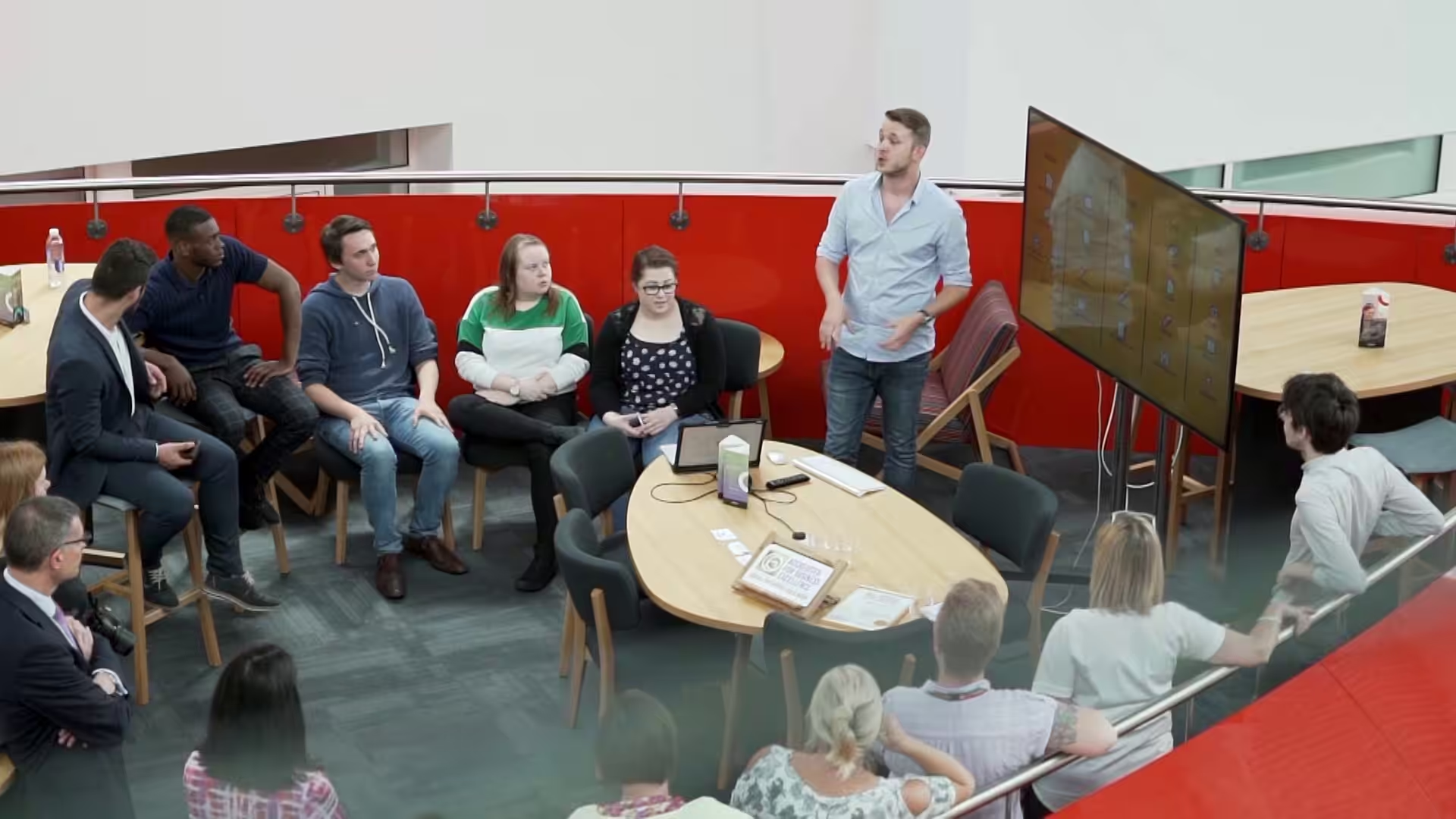
Southampton has a lively business scene. We regularly take part in local meet‑ups, trade events, and charity initiatives across Hampshire.
These gatherings give us a chance to listen to business owners, marketers, and founders who want better results from their websites. The same themes crop up again and again.
- Clearer communication during projects
- A defined process from discovery to launch
- Ongoing support after the site goes live
- Measurable improvements in enquiries or sales
At events, we often urge businesses to compare agencies carefully. Sure, reviewing a portfolio matters, but you also want to know how that work actually performs.
Our guide on turning clicks into customers with web design in Southampton covers what to look for beyond just the visuals.
Workshops and local panels let us chat through practical topics like budgets and scope. Lots of organisations ask what drives pricing differences, so we point them to our breakdown of how much a website costs in the UK.
Community conversations sometimes highlight red flags too. If an agency avoids talking about process, timelines, or post‑launch support, it’s probably wise to be cautious.
We share a structured approach in our Hampshire web design agency checklist for marketing managers. There’s also a practical list of questions to ask a web design agency before signing.
Staying involved locally keeps us grounded. It helps us shape websites that actually reflect the organisations and communities we serve across Southampton and Hampshire.
Add us as a preferred source on Google.
If this article has been useful, let us know!
Book a free intro call to talk through your needs.