Strategy & Brand
How to find a photographer who can elevate your brand's visual content
Finding the right photography expert really starts with knowing what you want your brand content to do. Maybe you need product shots, campaign visuals, team portraits, or coverage of events. You’ll want someone whose specialist work, portfolio, and professional standards actually fit your goals and budget. Directories like Find A Photographer are a good starting point, or you might check
Finding the right photography expert really starts with knowing what you want your brand content to do. Maybe you need product shots, campaign visuals, team portraits, or coverage of events.
You’ll want someone whose specialist work, portfolio, and professional standards actually fit your goals and budget. Directories like Find A Photographer are a good starting point, or you might check out product photography services if that’s your focus.
We’ll walk through how to check out visual style and experience, ask the right questions, compare costs without getting caught out, and plan a shoot that actually gives you content you can use everywhere.
Define your brand content goals
Clear goals are what let you find a photographer whose style and process actually match the job. It’s worth figuring out who the images are for, what they should say, where they’ll show up, and what you’re able to spend.
Clarify your audience and message
Start with the people most likely to buy, enquire, or spread the word. Jot down details like their job, sector, location, what stage they’re at, and the questions they want answered before taking action.
Then, what’s the message each image needs to support? Maybe you’re a service business that needs to show real people at work and a friendly vibe. Or maybe your products need close-up detail, a sense of scale, or to look like they’re actually being used.
Try to create a short visual brief that covers:
- Audience: who you want to reach and why
- Message: the one or two ideas you want viewers to remember
- Brand cues: colour palette, setting, wardrobe, tone, how formal it should feel
- Usage: website, social, press, email, print
- References: examples of lighting, composition, or energy you like
A documented brief keeps things consistent and helps avoid crossed wires. There’s a good guide to briefing a brand photographer if you want to dig deeper.
List required deliverables
List out what you actually need before you start contacting photographers. That way, you can see if their portfolio matches the formats and subjects you care about, not just a few nice shots.
Be specific about the number and type of final photos. Maybe you need wide website banners, vertical social images, team headshots, environmental portraits, product close-ups, or behind-the-scenes stuff.
Include the production bits that will affect the scope:
| Requirement | What we define |
|---|---|
| Image formats | Landscape, portrait, square, or a mix |
| File delivery | High-res print files, web-optimised, or both |
| Usage rights | Channels, territory, duration, and paid ad use |
| Locations | Office, client site, studio, or outdoor |
| People and products | Number of team, products, props, releases |
| Editing | Retouching, background removal, colour tweaks |
Build a shot list around where these images will actually go. Planning for specific website, social, or campaign slots is a big part of planning a brand photoshoot.
Set a realistic budget
Your budget needs to cover more than just the photographer’s time. Ask for an itemised estimate splitting out planning, shoot days, editing, travel, studio, assistants, props, styling, talent, and licence fees.
How you’ll use the images really affects cost. Photos just for your website usually need different rights than ones used in national ads or packaging. Get those rights sorted in writing before you start.
Don’t settle for a single headline price. Compare proposals based on the same deliverables, including the number of final images, revision limits, and licensing terms.
If funds are tight, cut the scope on purpose. Maybe focus on a half-day shoot, fewer locations, or just the highest-value images, then come back for more when you’ve got a new campaign.
Identify the right photography specialty
You want a photographer whose skills match the job, whether that’s showing off product detail, creating a lifestyle feel, or building trust in your team. A focused portfolio is usually more useful than someone who claims to do everything.
Product photography
Choose a product photographer when you need to show shape, material, colour, scale, finish, or function clearly. This is key for ecommerce listings, catalogues, packaging, adverts, menus, and product launches.
Ask to see examples of products like yours, especially if they’re tricky,jewellery, glass, food, cosmetics, clothing, anything reflective or fiddly. Each needs its own lighting, styling, and retouching approach.
A good brief will spell out angles, backgrounds, crop ratios, file sizes, and if you need cut-outs with transparent backgrounds. If you want to see the range, check out types of commercial photography and pick someone whose product work fits your channels.
Sort out who’s bringing props, styling, samples, and colour references before the shoot. Consistency helps customers compare products without distractions.
Lifestyle and editorial photography
Lifestyle or editorial photography shows your product, service, or team in a real context. These images work for campaign pages, social, brochures, press, and storytelling,places where a plain studio shot feels a bit flat.
Look for someone who can direct people naturally, build a believable scene, and keep your visual identity running through the set. Their portfolio should show smart composition and moments that don’t feel forced.
Give a creative brief that covers audience, vibe, locations, wardrobe, props, talent, and where the images will go. A photographer’s niche is often a mix of subject, audience, and approach,there’s a helpful guide on photography niche and positioning.
For editorial work, plan permissions, releases, weather plans, and a shot list that leaves room for the unexpected. That prep keeps the images useful across more than one campaign.
Corporate and personal branding photography
Corporate and personal branding photography is about helping people recognise and trust the folks behind your business. Think leadership portraits, team shots, workplace images, recruitment, speaker profiles, and founder-led content.
Pick photographers who can put people at ease and deliver consistent, well-lit images. Check their headshots and workplace galleries for natural expressions, retouching that flatters but doesn’t mislead, and a style that fits your site and comms.
Before booking, sort out background, clothing, location, image orientation, and formality. Make sure they can work around meetings and photograph teams without causing a stir.
When it’s a brand-led commission, compare portfolios against your creative needs and brand look. There’s some good advice on choosing the right photographer for brand content.
Search in the right places
You want to see evidence a photographer can turn brand strategy into consistent, useful visual content. Portfolios, networks, and recommendations all show different sides of that fit.
Review professional portfolios
Start with portfolios showing commercial or brand work, not just a few glossy shots. A good photographer will have consistent lighting, composition, colour treatment, and retouching across a full project.
Check if the work fits your channels,website, campaign, social, email, print. Brand photography should reflect your business’s identity and purpose, not just make stuff look nice.
Look for:
- Projects with a clear visual direction and a set of images that hang together
- Experience relevant to your needs,product, team, location, food, lifestyle
- Images with space for headlines, cropping, and different formats
- Case studies that explain the brief, deliverables, and what the photographer did
Pay attention to editing style. Heavy filters, odd skin tones, or trendy effects can make your content date fast or clash with your design.
Use creative networks and agencies
Specialist creative networks let you compare photographers by location, discipline, availability, and budget. Platforms can open up the search beyond word-of-mouth and let you filter before you set up a call.
A guide to finding photographers online points out the best route depends on style, budget, and experience. Have a brief ready before you look,include usage, location, number of assets, deadline, and whether you need styling, props, models, or video.
Creative agencies can recommend photographers they’ve worked with before, which helps if you need art direction or production management.
Still, always check each photographer yourself. A profile or agency intro isn’t a substitute for reviewing recent work, communication style, licensing, and the planned process.
Ask for trusted referrals
Ask people in your network for referrals from projects similar to yours. The best recommendations come from someone who can tell you how the photographer handled the brief, schedule, budget, revisions, and file delivery.
Ask specific questions, not just for a name:
- Did the photographer get the brand direction without endless back-and-forth?
- Did they keep the shoot organised and work well with staff or talent?
- Were the images delivered on time and in the right formats?
- Did the licence cover all your channels,web, social, ads, print?
Designers, web developers, marketers, and printers often see how photography performs after the shoot, so their opinions are useful. Industry referrals can help you narrow down a long list of commercial photographers for brand work to those with the right experience.
Evaluate portfolios and experience
You’re looking for a visual approach that suits your brand, proven work in similar settings, and reliable technical standards. A strong portfolio shows creative judgement and the ability to deliver usable assets.
Assess visual style and consistency
Start with recent work, not just the homepage highlights. Check if colour, lighting, composition, and retouching are consistent across campaigns or galleries.
Does the work fit the look your brand needs? For example, a portfolio full of moody, cinematic portraits probably won’t work for a product launch that needs clean backgrounds and bright colours.
Look for more than just a couple of great shots. The portfolio should show they can create a coherent set for your website, social, brochure, or press. There’s a guide on evaluating a photographer’s portfolio if you want a checklist.
Think about whether their images leave room for copy, crop well for different channels, and fit your layout. Creative style should support your content’s purpose, not fight against it.
Look for relevant industry experience
Prioritise experience that matches your assignment’s real demands. A photographer who’s shot food, property, manufacturing, events, or people at work will know what’s needed for access, prep, lighting, and timing.
Review whole projects if you can. This shows if they can handle a full shoot day, direct people who aren’t models, and deliver a varied set,not just a couple of lucky shots.
Ask for examples that match your needs, like:
- Location portraits for leadership or recruitment
- Process shots in workshops, offices, or production sites
- Product images for catalogues, ads, or online shops
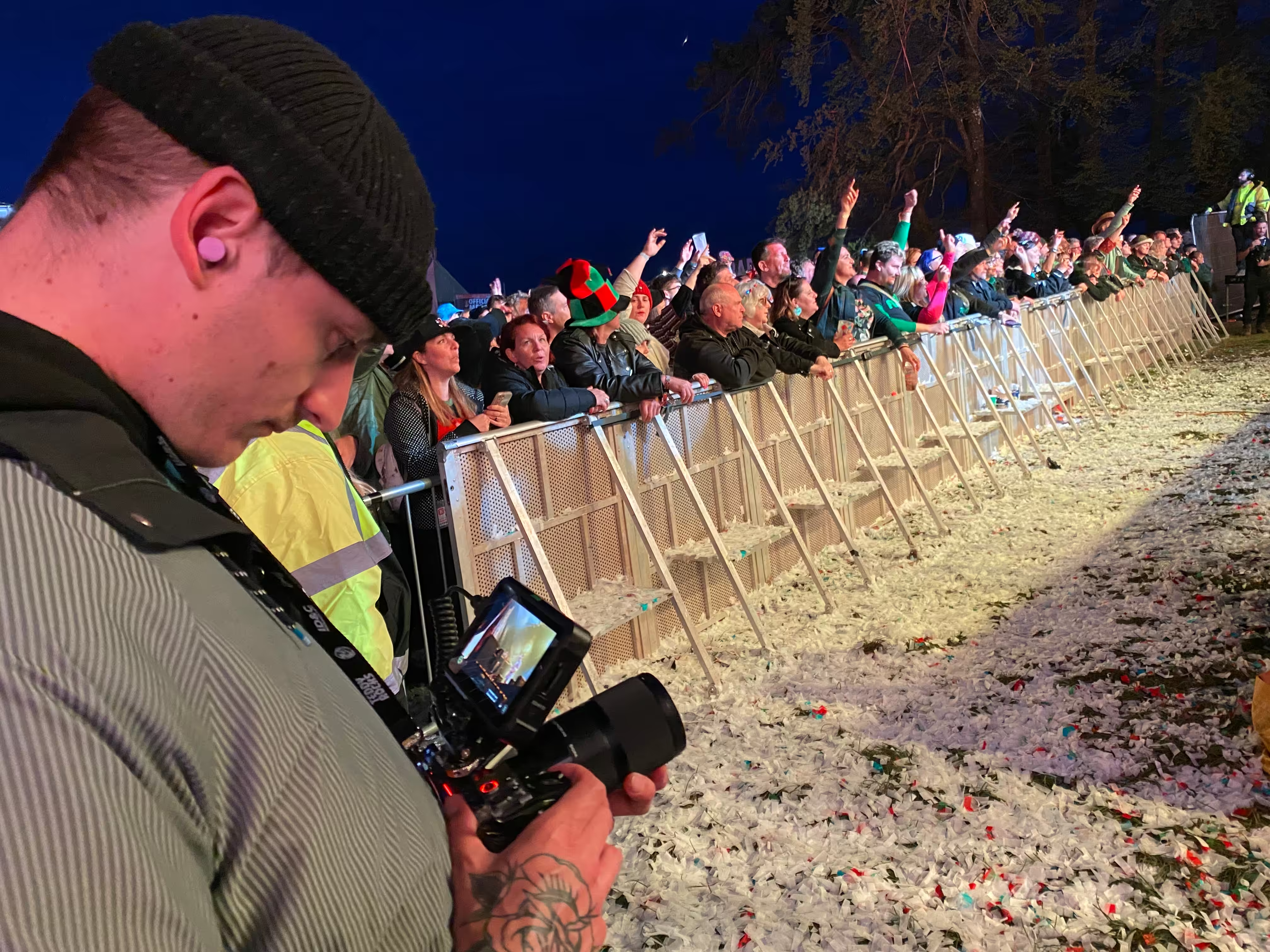
- Event coverage with fast-moving moments and tricky light
Check for client feedback and signs of professionalism. When choosing a photographer for a brand, style, quality, and experience should match your standards and workflow.
Check technical quality and usage examples
Look at image quality at a decent size, not just compressed social posts. Focus, exposure, skin tones, colour accuracy, clean backgrounds, and controlled highlights all matter, especially for print or hi-res screens.
See how they handle tricky conditions. Indoor lighting, shiny products, group shots, bad weather, and tight spaces can show more about their skill than a perfect studio shot.
Ask to see images used in real brand materials,webpages, reports, ads, packaging, email campaigns. This helps you judge if their framing works for common formats: landscape banners, portrait social posts, tight mobile crops.
Before booking, confirm things like editing turnaround, insurance, backup kit, and what’s included. A photography services buyer’s guide has a handy checklist for these practical checks.
Verify professional credentials
Check independent feedback, proper business protections, and the terms for using the finished images. These checks help make sure you’re hiring someone who’ll deliver brand content safely and reliably.
Read client reviews and testimonials
We look for reviews that mention work similar to our brief, like product shots, team portraits, hospitality, or campaign content. Specific feedback about planning, communication, punctuality, image quality, and delivery times is more useful to us than just a star rating.
We check recent reviews on more than one platform. It's always a good sign if the photographer responds thoughtfully to criticism.
A reputable photographer search directory can help us find professionals, but we also dig into their portfolio and website ourselves.
If the project has a big budget, tight deadline, or complicated logistics, we ask for two relevant client references. We want to know what the photographer actually delivered, if they stuck to the brief, and whether the client would hire them again.
Confirm licensing and insurance
Photography in the UK doesn't usually require a professional licence. Still, some shoots need site-specific permissions or credentials.
We check any requirements with the venue, local authority, organiser, or client before booking, especially for commercial shoots in public.
We ask photographers for up-to-date proof of public liability insurance and, when needed, professional indemnity insurance. Public liability is important if the shoot involves staff, guests, equipment, or hired spaces.
For drone work, we check the operator holds the right Civil Aviation Authority permissions or qualifications. Their insurance needs to cover aerial work too.
Guidance on checking whether a photographer is legitimate is helpful, but we always ask for documents directly rather than just trusting profile claims.
Review contracts and image rights
We get a written contract in place before any work starts. It needs to spell out deliverables, shoot date, locations, fee, expenses, payment timing, editing level, delivery format, and turnaround.
Image rights are a big deal. The photographer generally owns copyright unless the contract gives it to us or grants a licence, so we check if our licence covers website use, social, paid ads, print, PR, retailer listings, and use by partners.
We also agree on whether the photographer can use the images in their own portfolio. Releases may be needed for people, properties, artwork, or recognisable trademarks.
Any restrictions,territory, duration, exclusivity, credit, permissions to crop or alter,get recorded in writing.
Interview potential photographers
We use the interview to get a sense of creative fit, production discipline, and working habits before commissioning brand content. Portfolios matter, but the conversation tells us how they'll handle our goals, people, products, and timelines.
Discuss creative approach
We ask the photographer how they'd translate our brand into images. This covers composition, lighting, colour, locations, casting, props, and balancing planned shots with natural moments.
We share a concise brief with intended channels, audience, brand guidelines, required formats, and examples we like or dislike. We want to hear what they'd keep from those references and what they'd change to make the work feel fresh.
A good photographer asks questions about the purpose behind each image, not just how to copy a style. Their portfolio should show relevant work.
Guidance on choosing a business photographer for brand goals can help us compare visual consistency to our needs.
Ask:
- Which visual decisions would support our brand personality?
- How would you approach products, team members, or customer-facing locations?
- What shot list would you recommend beyond our initial requirements?
- How would you adapt if the weather, venue, or schedule changes?
Ask about production process
We clarify who manages each stage of the shoot. Does the photographer handle location scouting, permits, styling, assistants, lighting, retouching, and delivery, or do we need to provide any of that?
We ask for a proposed production schedule covering pre-production, shoot days, proofing, edits, and delivery. The number of final images, turnaround, file sizes, aspect ratios, and whether they supply web-ready and print-ready files all get confirmed.
Licensing comes up before we green-light the project. We specify where we'll use the content,website, paid social, print, partner campaigns,and get written confirmation of usage rights.
We also ask about backups and what happens if things go wrong. Practical questions for screening a brand photographer help us spot how they protect files and handle disruptions.
Confirm availability and communication
We check the photographer’s availability for planning meetings, shoot dates, edit reviews, and possible reshoots. If our campaign has a fixed launch, we work backwards from that date and agree approval points in writing.
One person from our team is the main contact, and we ask the photographer to name theirs. This keeps feedback clear and helps with urgent decisions on shoot day.
We agree on communication channels,email for approvals, phone or messaging for quick updates. Response times, payment milestones, cancellation terms, and what happens if illness or equipment failure hits the booking are all discussed.
Before signing, we ask for a written proposal that records scope, deliverables, timetable, costs, licensing, and responsibilities. It saves headaches later.
Compare proposals and pricing
We compare scope, usage rights, production plan, and deliverables before looking at the totals. Sometimes a lower quote ends up costing more if it leaves out key work.
Understand day rates and project fees
A day rate usually covers the photographer’s time on the shoot day, but proposals differ. We check working hours, overtime rate, crew, equipment included, and whether planning or editing is extra.
A project fee might combine planning, shooting, post-production, and delivery. This can make budgeting easier if there’s a set output, like a batch of website and campaign images.
We ask each photographer to split their creative fee from licensing and production charges. Commercial photography pricing often separates these, especially for campaigns with wider image use.
| Check | Why it matters |
|---|---|
| Shoot duration | Confirms whether the quote allows enough time for the shot list |
| Overtime terms | Prevents unplanned costs if the schedule runs late |
| Usage period and territory | Defines where and how long we can publish the images |
| Revision allowance | Shows what level of post-production changes the fee includes |
Review included services and expenses
We read through deliverables line by line. A proposal should state the number of final images, file formats, resolution, delivery date, and whether web-ready crops or social formats are included.
We also check what happens before the shoot. This might include creative direction, moodboards, location scouting, shot-list development, casting support, and call sheets. If we want consistent visual direction, these planning steps matter as much as time behind the camera.
Expenses should be listed separately, not just vague allowances. We look for studio hire, travel, accommodation, assistants, stylists, hair and make-up, props, set build, equipment rental, and retouching.
Brand photography pricing can cover different levels of planning and production support. We compare like for like, then ask for written clarification on anything marked as optional, estimated, or excluded.
Evaluate value beyond cost
We look for a photographer who can create work that fits our visual identity and works across all our channels. Their portfolio should show relevant subjects, lighting, and environments,not just pretty shots.
We also check the practical parts of their proposal. Production schedules, realistic turnaround times, backup plans, and organised delivery matter a lot for campaigns with fixed launches.
Price matters, but so do rights. A lower fee might only allow limited social use, while we may need images for ads, print, retailer listings, or long-term site use.
Guidance on comparing photographer quotes reminds us to compare scope, not just totals.
We pick the proposal that gives us the image quality, production support, and permissions we need.
Plan a successful collaboration
We get creative direction, schedule, and delivery terms sorted before the shoot. It’s the best way to give our photographer clear decisions and protect our time, budget, and content plan.
Create a clear creative brief
We write a brief with the campaign goal, target audience, channels, and required assets. We specify if images are for a website refresh, social, paid ads, print, or product launches.
We include visual references for lighting, colour palette, framing, location style, and mood. These should guide, not force the photographer to copy anyone else’s work.
We define what must appear,products, team, premises, customer moments, or brand details. Clear creative exchange helps both sides develop visuals that fit the story, as in this guide to photographer and brand collaboration.
We confirm who can approve creative decisions on the day. It avoids delays when styling, props, talent, or locations need quick choices.
Organise shot lists and logistics
We build a prioritised shot list with must-have, useful, and optional images. For each key shot, we note the subject, setting, orientation, intended use, and any product or brand requirement.
We plan the schedule around practical limits. This includes location access, daylight, weather contingencies, staff availability, product prep, travel, and set changes.
| Item | What we confirm |
|---|---|
| Location | Access times, permissions, parking, power, changing space |
| Products | Quantities, clean samples, backups, packaging requirements |
| People | Call times, releases, wardrobe, hair and make-up needs |
| Equipment | Lighting, backgrounds, props, tethering, storage |
We share final logistics with everyone before the shoot. A structured workflow from planning through to execution supports more consistent brand photography collaboration.
Set expectations for delivery and revisions
We always agree the deliverables in writing before booking a photographer. That means nailing down the number of final images, file formats, image sizes, orientation, retouching level, delivery date, and how they’ll actually send the files.
Usage rights are a big deal too. Our agreement should spell out where we’re allowed to use the images, for how long, if paid ads are covered, and whether the photographer can show off the work in their own portfolio.
It helps to have one person gather feedback from the team and send back a single, tidy revision list. Feedback’s easiest to manage when it mentions the image filename, what needs changing, and why.
We also try to be clear about what’s a revision and what’s actually new work. A colour tweak or a crop probably fits the revision allowance, but if we suddenly want an extra product shot or a total re-edit, well, that’s usually a separate thing.
Add us as a preferred source on Google.
If this article has been useful, let us know!
Book a free intro call to talk through your needs.