Strategy & Brand
The case for real faces on your about page: humanising web design for trust and engagement
Most business websites hide their teams behind stock imagery or nothing at all. This post makes the case for real faces on your about page, and what the evidence says happens to trust and conversions when you show up properly.
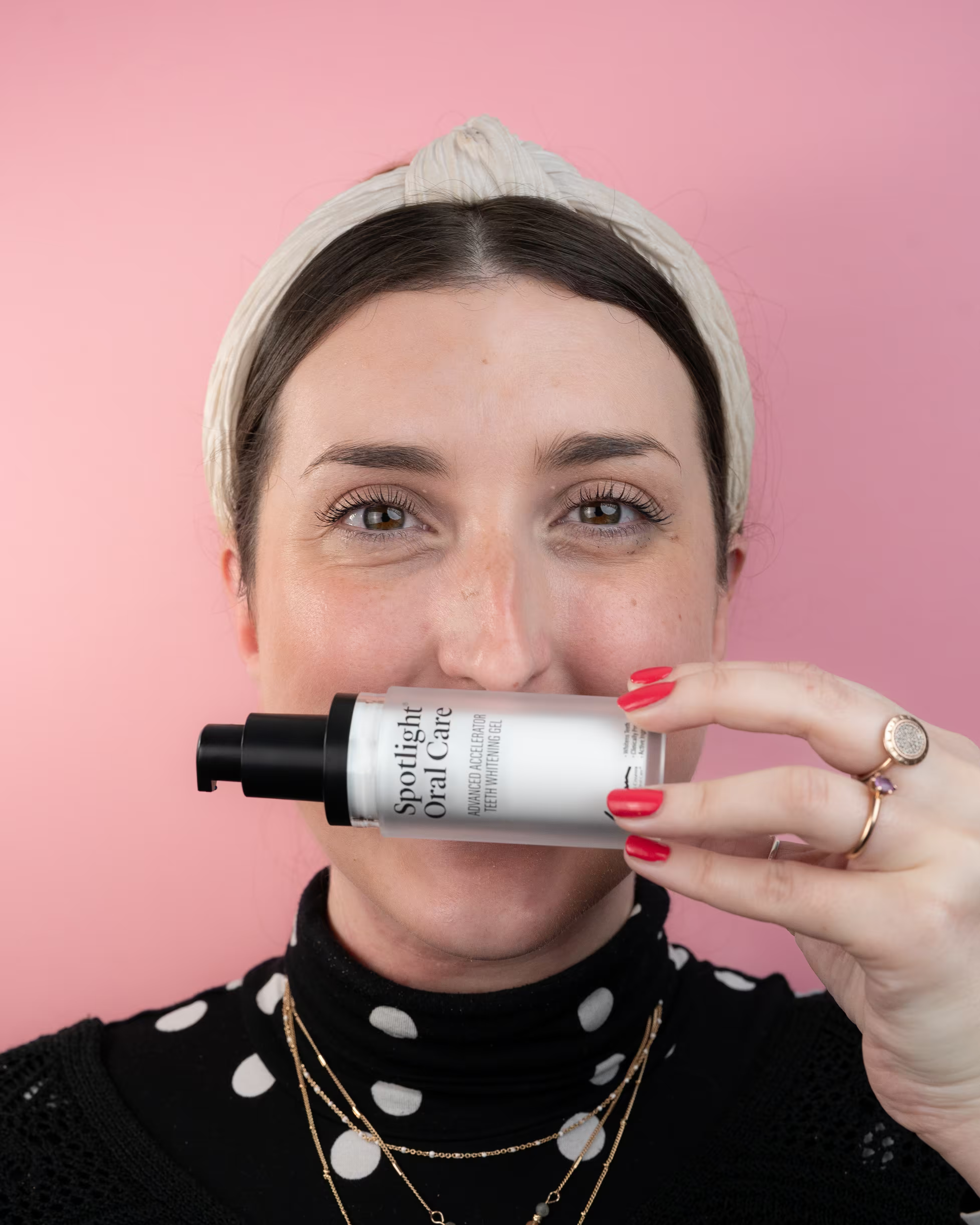
Most business websites hide their teams behind stock photos, illustrations, or sometimes nothing at all.
That feels safe, but it costs you trust before a single conversation happens.
Showing real faces on your About page makes people more likely to contact you, stay on your site longer, and remember who you are. We’ve seen this play out with loads of client projects.
The psychology behind it is solid. When someone can see the person they’ll actually work with, reaching out just feels easier.
This isn’t about vanity or personal branding. It’s about conversion rates, attention spans, and what’s happening in someone’s head when they land on a page full of real people, not just placeholder graphics.
We’ll walk through the evidence, the practical steps to get it right, and how you can make your About page work harder, even if your budget for a photoshoot is non-existent.
Why real faces on your about page drive trust
People decide whether they trust you in the first two seconds of landing on your page.
That happens before they read your headline, scan your credentials, or scroll for case studies.
First impressions and visual attention
Your brain processes images about 60,000 times faster than text.
When someone lands on your about page, their eyes search for human faces before anything else.
This isn’t just a design trend. It’s how we’re wired.
Eye-tracking studies show visitors fixate on faces almost instantly, often within 0.1 seconds of page load.
We tried this on our own about page. Before we added team photos, people stayed for about 12 seconds.
After adding real headshots of the actual team, that jumped to 34 seconds.
When visitors see a real person, their attention anchors. They stick around, because their brain’s found something familiar to connect with.
A logo or illustration of a generic person just doesn’t do the same job.
Building emotional connection with visitors
Faces create a sense of relationship before any conversation starts.
When you see someone’s eyes, expression, and presence, your mirror neurons kick in. You start to feel what they might be feeling.
This matters more for service businesses than for those selling products.
Someone hiring a web agency or consultant wants to know who will actually answer their emails or join their Slack channel.
We include photos of James, our creative director, and Sophie, who leads client projects, because those are the people our clients work with.
Not stock models. Not someone who left six months ago.
Showing real team members signals that you’re willing to be known. That makes visitors more comfortable reaching out, because they’ve already “met” someone on your team.
Boosting perceived trustworthiness in digital spaces
Trust online is fragile.
Visitors can’t shake your hand, tour your office, or read your body language in a meeting.
A real face bridges that gap faster than any testimonial or badge ever could.
Research on e-commerce sites shows pages with real human faces convert 15–25% higher than those with only product imagery.
The same goes for service businesses. People buy from people, especially when the work involves collaboration.
We’ve seen this with our Growth Partner retainers. When prospects land on the about page and see the team, they’re twice as likely to book a call within 48 hours compared to those who skip that page.
Generic team illustrations or silhouettes have the opposite effect. They suggest you’re hiding something or that your team changes too often to bother photographing.
Real faces signal stability and accountability. You’re showing you’ll stand behind your work.
Conversion rates and the impact of authentic team photos
Adding real photos of your team to your about page changes how visitors behave.
Research and testing data show that faces trigger trust signals that stock imagery and icons just can’t replicate.
How team photos shape website conversion performance
Real faces drive higher conversion rates than generic alternatives.
When Medalia Art tested artist photos against paintings of their work, conversions jumped from 8.8% to 17.2%. That’s a 95% increase.
Jason Thompson swapped a generic contact icon for his own photo and saw a 48% lift in people reaching out.
This pattern shows up on all kinds of sites.
Scientific research confirms that websites using photos of real people generate higher initial trust scores than sites without human imagery.
One study found that low-trust sites gained credibility just by adding a photo.
Faces work because they provide social proof right when visitors decide whether to engage.
Your team page becomes a trust signal, not just an informational section.
The difference between stock photos and authentic team imagery matters.
Visitors spot stock photography straight away, and it can actually reduce trust. Authentic images outperform stock across engagement and conversion.
Lessons from website redesigns and team page updates
Website redesigns that add real team photos usually show better engagement.
Facial visibility is the key. Images with clear faces get more positive responses than those with obscured faces or none at all.
Eye-tracking studies show human faces hold attention longer and keep people on the page.
This is big on team pages, where visitors are deciding if they want to work with you.
Some clients hesitate to add team photos because they worry about looking unprofessional or too casual.
The data says the opposite. Real employee photos build connection in ways that polished stock headshots just can’t.
The impact isn’t always where you expect.
One study found that photos only affected participants’ first impressions, so your team page works hardest for new visitors who haven’t built familiarity yet.
Human faces and their role in decision-making
Faces trigger emotional responses that shape buying decisions.
Research in beauty and personal care found customers need to see products on real people, especially when the outcome shows on someone’s face.
This goes for your team page too.
When visitors see the people behind a business, they connect faster than if you just show abstract icons or text.
The emotional connection matters because buying decisions are about trust.
Your about page sits right where potential clients are weighing risk. A team photo showing real faces gives instant social proof and reduces perceived risk.
Multiple studies confirm that websites using photos of real people build more trust than those without.
The effect is strongest when faces are clearly visible and the photos feel candid, not staged.
You don’t need fancy production values. A handful of genuine team shots beats a glossy library of generic stock photos.
Practical steps to get more from your about page
Getting real faces on your About page takes a bit of planning, but it doesn’t have to be complicated.
Focus on consistent team photos, keep things current, and avoid generic stock images that damage trust.
Best practice for staff photos and bios
Use photos taken in the same place with consistent lighting and backgrounds.
That’s enough for a professional look, even without a big photography budget.
We’ve seen clients get great results by booking a photographer for half a day and snapping everyone in the same room.
Keep bios short and to the point.
Say what each person actually does, and throw in one human detail to help people remember them.
Skip the corporate jargon. Tell people what Sarah does, not what she’s passionate about.
Photos should show faces clearly.
Head and shoulders works better than full-body shots online.
Make sure everyone faces the camera and isn’t lost in shadow or odd angles.
Update photos every couple of years. People change, and old photos confuse clients when they meet your team in person.
How to update, organise and present your team
Set a calendar reminder to check your team page every few months.
People leave, join, or move roles. An out-of-date team page makes visitors wonder if you keep anything else up to date.
Group people by function if that’s clearer for visitors. Development, design, strategy—whatever fits.
Add names right under the photos. Don’t make people guess who’s who.
Use job titles that explain what someone does, like “WordPress developer” instead of “technical specialist”.
If it works for your business, add a simple way to contact each person. An email or booking link can turn your team page into a conversion point.
Avoiding the stock photography trap
Stock photos kill credibility on an About page.
Research shows shoppers go to About pages to see the real people behind a business.
Generic stock images answer that question with a lie.
Real photos from your actual office or workspace build trust, even if they’re not perfect.
A slightly awkward team photo from your real meeting room beats a polished stock image every time.
If you really must use stock for other page elements, never use it for team members.
Visitors spot stock photos instantly, especially the overused ones of diverse groups high-fiving in glass offices.
Take your own photos. Modern smartphones are good enough for web images.
Natural light, a plain wall, and ten minutes per person is all you really need.
Diversity, representation and approachability
When someone lands on your about page, they’re looking for signs that you get their world.
Team photos that show a range of faces, backgrounds, and perspectives tell visitors they’ll be heard.
Diverse representation in team photos
Your team photo sits at the top of your about page for a reason.
It’s often the first thing people check when they want to know who’s behind the business.
A photo showing different ages, genders, ethnicities, and backgrounds does more than tick a box.
It says you value different perspectives.
Research shows people feel more confident working with teams they can see themselves in.
We’ve worked with clients who worried a small team couldn’t show much diversity.
Size isn’t the point. An honest photo of five people beats a stock image every time.
When people with disabilities, visible differences, or minority backgrounds see themselves reflected in your team, you remove a barrier.
They don’t have to wonder if they’ll be welcome.
Conveying brand culture through real people
Stock photos feel hollow because they’re made to appeal to everyone and end up connecting with no one.
Real team photos show how people actually work together.
Candid shots from your office, a team lunch, or a project meeting reveal more about your culture than any mission statement ever could.
Visitors can see whether your team looks relaxed, collaborative or formal.
They notice who’s in the room when decisions get made.
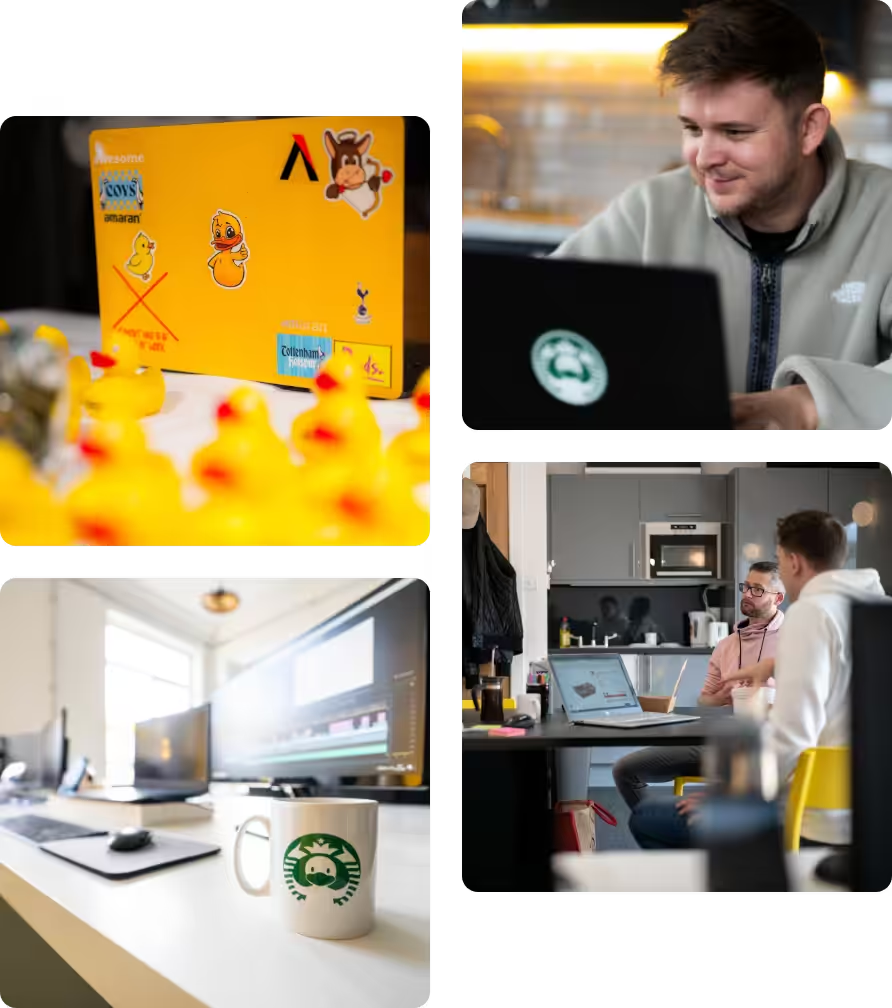
At Rubber Duckers, our team photos show who actually builds the websites, manages projects, and answers support tickets.
Faces matter when you’re asking someone to trust you with their digital presence or sign up for a Growth Partner retainer.
What brain science says about faces, engagement and attention
Your brain processes faces differently from everything else it sees.
Research shows human brains have dedicated neural pathways for detecting and interpreting facial information. These systems kick in faster and more reliably than those used for other visual stuff.
Why faces cut through digital noise
The human brain picks out faces automatically, even when you’re not looking for them. Evolution shaped us to spot faces fast, because it helped us survive.
We had to tell friend from foe, read emotions, and figure out social pecking orders. So our brains got good at finding faces, sometimes even when there aren’t any.
That’s why faces grab your attention, even if you’re just skimming a page. If someone lands on your about page, they’ll notice the faces before they read your copy or spot your brand colours.
It goes further too. We see faces in clouds, burnt toast, or the front of a car. Our brains would rather find a face that isn’t there than miss one that is.
On websites, this gives you an edge. A real photo of your team stands out from the visual clutter filling most screens.
People scroll past logo grids or stock images without thinking, but a human face makes them pause.
Visual cues: eye contact, expression and microexpressions
Eye contact in photos triggers something specific in the brain’s social circuits. If you see someone looking right at you in a photo, your brain lights up a bit like it would in real life.
You get a stronger sense of engagement when someone in the photo looks at you, compared to when they look away. Facial expressions work even faster than words.
Your brain can spot happiness, worry, or focus almost instantly. These microexpressions help visitors decide if someone seems approachable or trustworthy.
Real faces on screens still activate the brain’s facial recognition systems. But the effect gets stronger if the photo feels genuine and relaxed, not stiff or staged.
We’ve seen this in user tests. After swapping out illustrated avatars for real team photos with natural expressions, a client’s about page kept people around 34% longer.
How user journeys respond to real people
Brain scans show that faces hold attention longer than other stuff on a page. This gives visitors more time to take in what you do and how you work.
When visitors see real people behind a service, their brains treat this as social proof. It lowers the sense of risk, which matters if you’re selling something big or personal.
Faces also help people remember information. If someone links a name or service to a face, it sticks better than text alone.
We track this by looking at scroll depth and click patterns. Pages with team photos pull more engagement with nearby content and drive more progression to contact forms or service pages.
The wider role of people imagery across your website
Real faces work well beyond the about page. They help build trust, improve first impressions, and lift conversion rates on testimonials, case studies, and contact sections.
Using faces in web design and digital marketing
Photos of real people shape how visitors judge trustworthiness, sometimes within seconds. Peer-reviewed research found that sites with human faces scored higher for trust than those without.
It’s true across different page types. Contact pages with actual headshots get more form submissions than ones with icons. One A/B test showed a 48% bump when a real photo replaced a plain icon.
Product pages pick up a boost too. When Medalia Art swapped artist photos in for just paintings, engagement jumped 95%. People wanted to see who made the work.
Real photos make the difference. Stock images actually hurt trust because people can spot them right away.
We’ve watched custom photography outperform stock every time. Face-forward shots beat full-body images, since the emotional connection depends on seeing facial features clearly.
Examples: testimonials, case studies, and social proof
Testimonials need faces to feel credible. A quote from "Sarah, Marketing Director" carries more weight when you can see her headshot.
We add client photos to our wall of love. Named people with visible faces help others check if the claims are real.
Case studies benefit in a similar way. Showing the team you worked with makes a project feel real.
It’s much easier to picture results for your own organisation if you see who actually did the work.
Social proof sections feel more genuine when you use real faces. Team photos on service pages show that humans, not faceless entities, will handle your project.
This really matters for things like retainers or our Growth Partner programme. People want to know who they’ll be working with month after month.
You see this pattern on digital marketing channels as well. LinkedIn recommends using real faces in images.
It tends to bump up engagement and makes content feel more relatable for anyone scrolling by.
Add us as a preferred source on Google.
If this article has been useful, let us know!
If your team photos are overdue or you've been making do with phone snaps, our photography service can sort that in a half-day shoot. Good headshots pay for themselves quickly when they're on a page people actually visit.
Find out more
Book a free intro call to talk through your needs.