Strategy & Brand
What a brand personality workshop actually looks like: Real structure, people, and outcomes
A brand personality workshop is a working session where you figure out how your brand talks, acts, and feels to anyone who comes across it. You turn all those fuzzy ideas about tone, values, and character into something you can actually use for design, copy, and strategy. Most agencies run these at the start of a project. Sometimes, we use…

A brand personality workshop is a working session where you figure out how your brand talks, acts, and feels to anyone who comes across it.
You turn all those fuzzy ideas about tone, values, and character into something you can actually use for design, copy, and strategy. Most agencies run these at the start of a project. Sometimes, we use them to get things back on track when a brand feels a bit lost or all over the place.
The format changes depending on what you need. Some workshops focus on personality traits and voice.
Others dig into archetypes, messaging frameworks, or how the brand should behave on different channels. We've run sessions that last half a day and others that stretch across two days. It really depends how much you need to cover and how aligned everyone already is.
Let's walk through what happens inside these workshops. You'll get a look at the exercises we use, the materials that keep things moving, and what you actually walk away with.
Inside a brand personality workshop
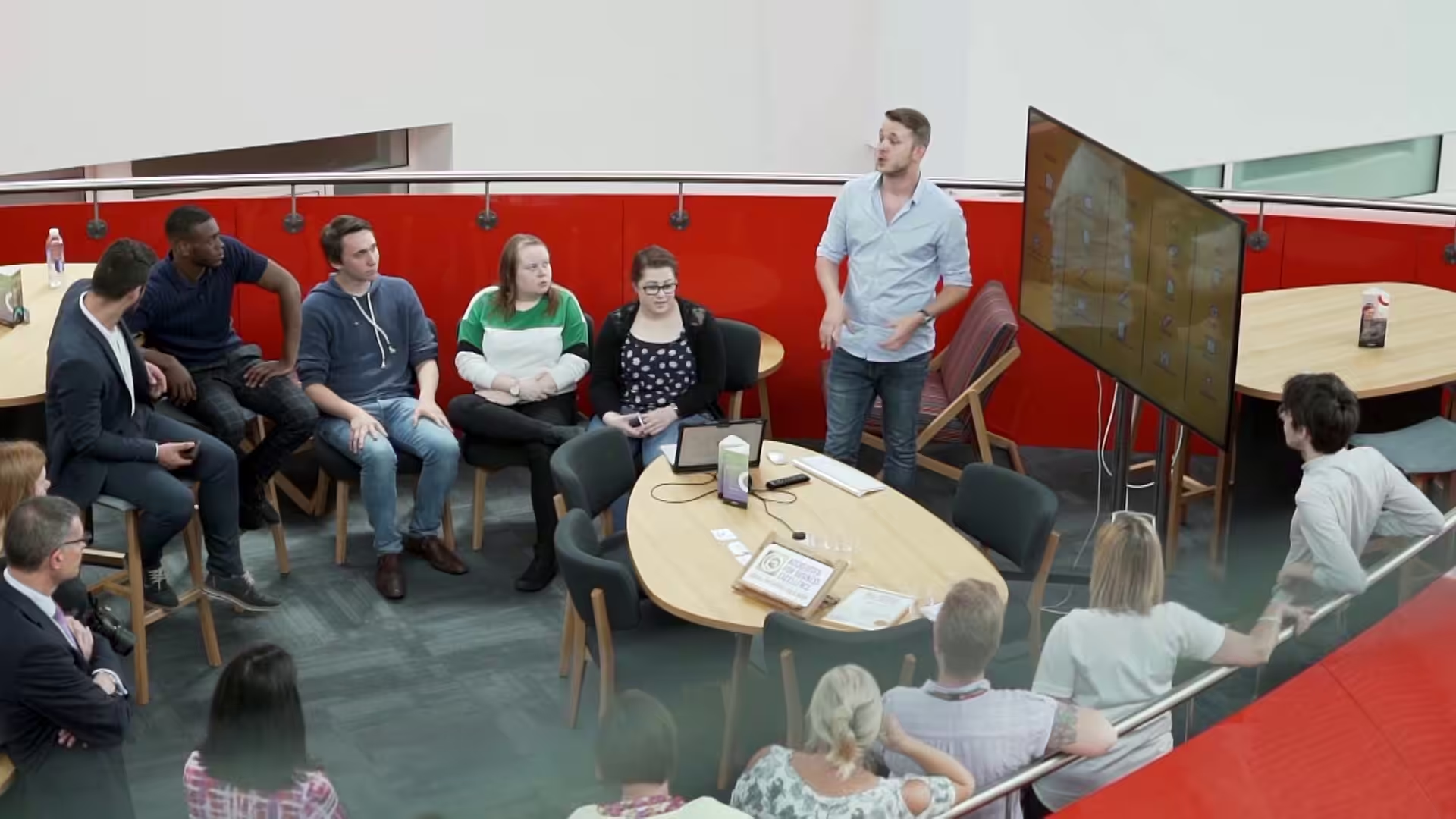
A brand personality workshop usually takes half a day to a full day. Your internal team works through structured exercises with a facilitator.
The people in the room and how the session runs will decide if you get useful brand personality traits or just a bland list of adjectives.
Common formats and timings
Most workshops run three to six hours. We usually book them as half-day sessions. That gives enough time to get through the exercises without everyone zoning out.
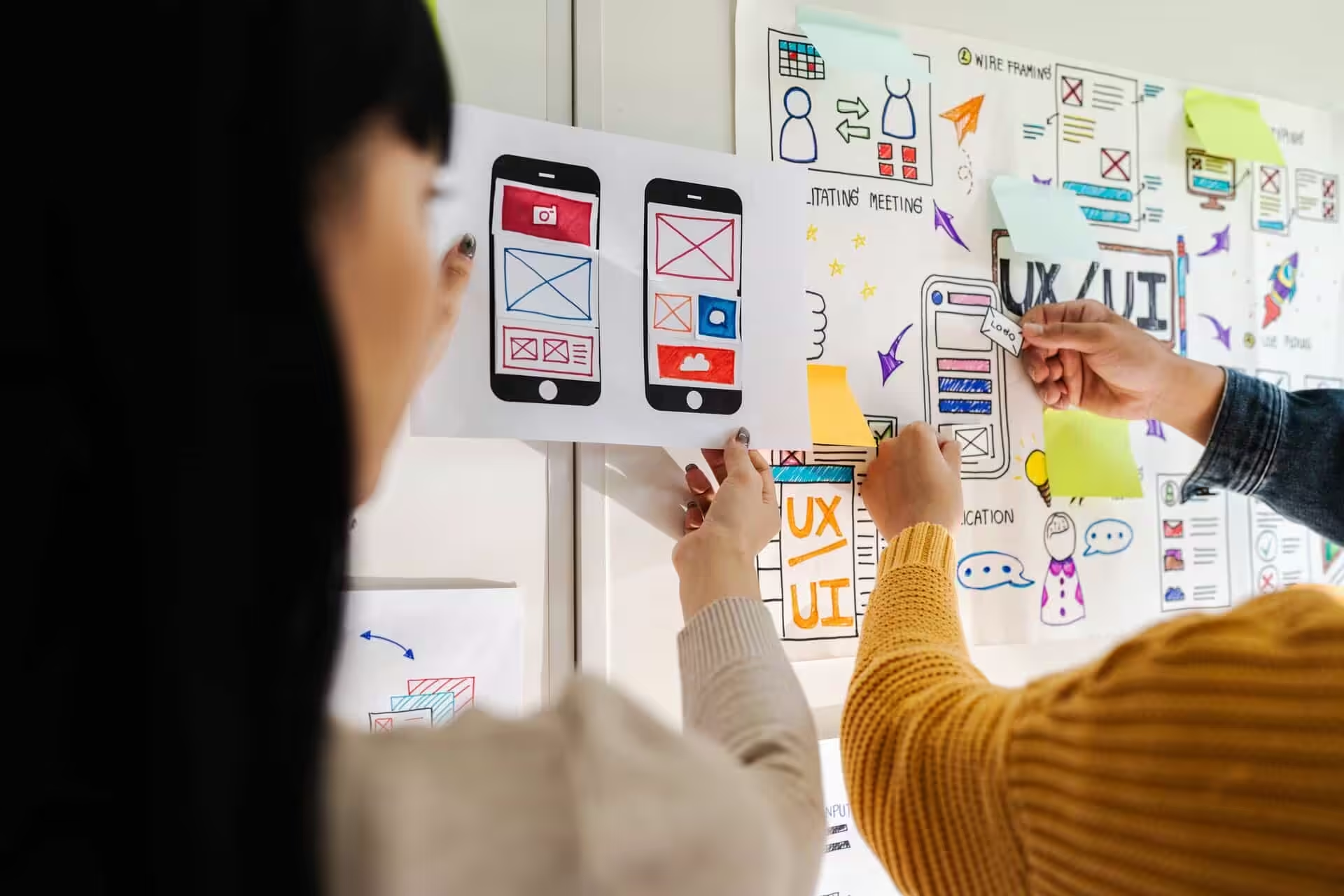
The format shifts depending on whether you're in person or remote. In-person, you get post-its, big sheets of paper, and walls covered in ideas. Remotely, we use Miro or FigJam so everyone can jump in at the same time.
Some strategists like splitting the workshop into two shorter sessions. That gives people time to mull things over and come back with fresh perspectives.
For The Bike Project, we ran two half-day sessions a week apart. The break let the team test their thinking against real marketing decisions.
Who's in the room and why it matters
You want people who see the brand from different sides. Usually, that means founders or senior leaders, someone from sales or customer service, and the folks making customer-facing content.
The person who talks to your audience every day is the most valuable. They know what sticks, what flops, and what traits actually fit how customers already see you.
Keep the group between four and eight people. Fewer than four and you miss key views. More than eight and you end up with presentations instead of proper conversation.
A facilitator from outside your team asks sharper questions and notices patterns you might overlook. They keep things moving and make sure everyone gets a word in.
Brand workshop agenda at a glance
The session starts with alignment exercises. You get clear on what the brand does and who it serves. This isn't the moment to argue business strategy, but you need everyone on the same page before diving into personality.
Next, you tackle personality exercises. We use things like the personality scale (rate adjectives from 1 to 10), the "this but not that" framework (set trait boundaries), and scenario questions like how your brand would act at a networking event.
The last hour is all about narrowing down to three to five core personality traits with clear definitions. Each trait gets an explanation of what it means in practice. These definitions go into your brand guidelines and shape every decision about tone of voice, visuals, and how you show up everywhere.
Key exercises that shape the workshop
A brand personality workshop works because of the exercises that take you from vague ideas to real decisions.
We run these with clients a lot, and these activities are the backbone of how we get through brand discovery in a day.
Brand audit and discovery
We always start with a brand audit. You can't build a personality if you don't know where things stand.
We look at current brand materials, customer feedback, competitor positioning, and any past marketing that hit or missed.
During discovery, we do a SWOT analysis with everyone present. People write strengths, weaknesses, opportunities, and threats on sticky notes and group them up. This gets everyone seeing what the brand does well and where it struggles.
We also check out customer data, survey results, sales feedback, social comments. This shows how people actually see the brand, which can be a surprise.
This bit usually takes an hour or so. By the end, we've got a list of strengths to build on and gaps to tackle.
Archetypes and personality mapping
Brand archetypes give you a shared language. We use the classic 12 (Creator, Caregiver, Ruler, Sage, and so on) as a starting point, then ask people to pick the few that match the brand vision.
It's not about picking what sounds cool. It's about what actually fits. If you pick "Outlaw" but sell to cautious corporates, something's off.
We map chosen archetypes to personality traits. If "Sage" comes up, we ask what that means: knowledgeable, calm, educational? We jot down adjectives and test them against the target audience to see if they land.
One client picked "Explorer" and "Creator" as their pair. We turned that into messaging that pushed innovation and curiosity, which flowed into their website rebuild and later campaigns.
Brand values and positioning exercises
Brand values guide every decision, so we spend time nailing them down. Everyone writes three to five values that matter most, then we talk through why each belongs.
Next comes the positioning statement. We use a simple fill-in-the-blanks: for [target audience], [brand name] is the [category] that [unique benefit] because [reason to believe].
People fill this out using insights from the audit and archetype work.
This forces everyone to be clear. Vague lines like "we help businesses grow" get swapped for specifics: "for SaaS startups with 10 to 50 employees, we're the growth partner that delivers measurable lead generation because we combine strategy, design, and development in one team."
We test the statement in real scenarios. Would it help pick a social platform? Does it shape a homepage headline? If not, we tweak it.
Bringing it to life: personas and storytelling
Brand persona work turns traits into something you can use. We create a fictional character who embodies the brand, with a job title, hobbies, style, and favourite words.
For a retail client, we built their persona as a knowledgeable shop assistant who loves helping people find exactly what they need. That shaped everything from email tone to product photos.
We also make a customer persona. This isn't the brand, it's the real person you serve. We list their pain points, goals, and how they decide to buy.
The brand story exercise rounds things off. We ask everyone to write a short story explaining why the brand exists, what problem it solves, and what success looks like for customers. Spotify Wrapped is a famous example, it turns listening data into a personal story that nails their mission.
We usually spend 45 minutes on personas and another half hour on the story. By the end, you have documents you can use for marketing, sales, and product work right away.
Tools, templates, and workshop materials
Good materials keep a brand personality workshop on track. We use a mix of downloadable templates, physical prompts, and collaborative boards to keep teams focused.
Branding workshop template examples
A decent branding workshop template gives structure without killing creativity. We usually use templates with visual identity mapping, brand archetype exercises, and positioning frameworks. These live in Miro, Mural, or FigJam.
Most templates have the same basics. Voice and tone grids, competitor analysis boards, and value proposition canvases show up in almost every set. The brand archetype map helps teams pin down traits by comparing to classic characters. A positioning template clarifies who you serve, what you offer, and why it matters.
Some templates pack in too much. We cut anything that doesn't help with personality or visuals. Eight to ten exercises is plenty.
Physical and digital workshop resources
Digital whiteboards work for remote or hybrid teams. Miro and Mural let everyone jump in at once, which speeds things up. FigJam adds voting and comments to make decisions easier.
In person, you need proper kit. We bring printed worksheets, big foam boards, sticky notes in all colours, and fat markers everyone can read. Sharpies are better than biros.
For a legal tech startup in Manchester, we ran a digital workshop for their remote team in 90 minutes. The in-person version, with printed guidelines and competitor boards, took two hours, mainly because people spent longer looking at the visuals.
Guiding discussion with cards, boards, and worksheets
Brand personality cards help teams describe their brand in plain language. Each card has a trait like "approachable", "authoritative", or "playful". Teams sort them into piles that fit or don't fit.
Worksheets keep things moving. A competitor tonality grid shows how others in the space sound, which helps spot gaps. A visual language board collects reference images that match the mood you want.
We use a simple worksheet with three questions: who are we talking to, what do we want them to feel, and what should they remember. We pin that up so everyone can see it for the whole session.
Defining your brand: outputs and artefacts
A brand personality workshop gives you real documents that guide how your brand shows up. These outputs take all the talk about character and values and turn it into practical tools your team can use.
Drafting brand values and vision
Brand values are the principles that shape how you work and make decisions. They come out of exercises where teams debate what matters, then boil it down to three to five essentials.
Teams usually start with a long list of hopeful words. The hard part is picking values that fit how you work now, not just how you want to look.
Your brand vision sits next to these values. It says where you want the brand to go and what you want to build. We usually ask for a single sentence or short paragraph that links back to the personality you picked earlier.
These documents become reference points for hiring, product, and partnership calls. One client checked their values before deciding on a new service.
Making the brand voice clear
Brand voice is how you sound in writing. It's about word choice, sentence structure, and the overall feel of your copy.
Most workshops end with a voice chart listing three to five traits. Each trait has a definition, what it means in real life, and examples of language you'd use or avoid. A brand with a "knowledgeable" voice might explain technical stuff clearly, but never talk down.
Tone of voice is a bit different. Voice stays steady, but tone shifts depending on the situation. You might be upbeat in a welcome email and calm when handling a complaint.
We usually make tone guidance as a simple grid showing how the voice flexes in different situations. This helps writers use the brand personality properly without overthinking every line.
Deciding on the visual identity
Visual identity covers the design elements that show off your brand’s personality. That means colour palettes, typography, imagery style, and graphic treatments.
Workshops don’t really deliver finished designs. They give you direction through mood boards, reference images, and a few agreed descriptors that a designer can actually use.
A team might say their brand feels approachable and energetic. That usually means warm colours, rounded sans-serif fonts, and photos of real people instead of stock shots.
These choices get written down as visual principles. It’s not fancy, but it works.
At Rubber Duckers, we like to run a quick exercise where everyone brings in design examples they like and explains why. Those conversations usually reveal what the brand should look and feel like more clearly than any abstract chat about aesthetics.
How workshop findings shape brand guidelines
Brand guidelines pull together everything from the workshop into one reference. They explain the brand’s positioning, lay out the personality, and set the visual and verbal standards.
The best guidelines use real examples. You’ll see correct logo use on actual backgrounds, sample social posts in the brand voice, and how brand values shape customer service replies.
These docs keep teams on the same page as you grow. When someone new joins or you work with an outside partner, the guidelines usually answer most questions, no need for endless meetings.
We build brand guidelines as living documents that teams can update. A PDF left on a shared drive just gathers dust. A wiki or Notion page that people actually use and tweak stays relevant.
How workshops drive real strategy and client buy-in
Workshops push decisions that would otherwise get lost in email threads or endless debates. They also create shared ownership, which often decides whether a brand strategy actually gets used after the project wraps up.
Aligning leadership and teams
Brand projects often stall because leaders have different ideas about who the company serves or why anyone should care. A brand personality workshop brings those differences out in the open, fast.
We get founders, marketing leads, and customer-facing teams in the same room. Sales teams hear objections marketers never think about, and product teams describe things in ways customers don’t use. When a CEO says the brand should feel "premium" and the sales director says prospects care more about speed, the workshop is where you sort that out.
The point isn’t just to get everyone to agree. It’s to make the branding process faster and the end result stronger because everyone’s on the same page before design starts.
Building a comprehensive brand strategy
A brand personality workshop feeds into the wider brand strategy by nailing down tone, traits, and the character your messaging and design should show. Personality sits alongside positioning, audience, and messaging priorities.
The workshop helps you figure out what the brand should sound like, how it should act, and which traits set it apart. Those answers shape copywriting, visual identity, and website design.
We use workshop outputs to create messaging frameworks, tone of voice guidelines, and design briefs. When everything points in the same direction, the brand feels coherent instead of cobbled together.
When to run a branding workshop again
Workshops aren’t just a one-time thing. Companies should revisit the brand personality workshop whenever the business model shifts, the target audience changes, or new leaders come in and the team loses shared context.
We’ve run follow-up sessions for clients entering new markets, prepping for acquisition, or launching new products for different buyers. How often you need a workshop depends on how quickly things are changing.
A company in growth mode might need an annual check-in. A more stable business might only need a refresh every couple of years.
If the marketing team can’t agree on tone, or new hires don’t get what the brand stands for, that’s your cue to run the workshop again.
Examples, outcomes, and learning loops
A workshop leads to decisions that actually change how a brand acts, speaks, and shows up. What matters is what gets used after, what shifts inside the team, and what you learn from seeing it all play out.
What changes after a workshop
The personality traits you lock in during the workshop become filters for every branding decision. When we ran a workshop for a food tech client, we landed on "curious, reliable, and warm" as their core traits.
That meant their blog posts could ask open questions without sounding unsure. Their emails could mention failed experiments and still keep trust. Their imagery showed real people, not stock photos.
Brand strategists take those traits and write them into tone-of-voice guidelines, visual direction, and content calendars. You stop arguing about whether a headline feels right and start checking if it matches the agreed personality.
Social posts get easier to sign off. Website copy comes together faster. Hiring gets clearer because you know what kind of voice fits the brand.
At Rubber Duckers, we’ve seen clients cut their content review cycles in half because the personality framework makes things less vague.
Real-world results
We worked with a SaaS company that used safe, corporate language everywhere. After their workshop, they switched to "helpful, practical, and human" as their traits.
Within three months, their email open rates jumped 18 percent and support ticket volume dropped because the help docs finally sounded approachable.
Another client in education used their workshop outputs to rebuild their whole brand story around "adventurous, thoughtful, inclusive". They rewrote their homepage, retrained their sales team, and redesigned their pitch deck. Their demo request conversions went up 22 percent in the first quarter.
The traits you choose really shape how people see you. A fintech brand might pick "bold, transparent, grounded" to stand apart from old-school banks. A sustainability consultancy could go with "practical, urgent, optimistic" to avoid sounding preachy.
You see the results in engagement, conversions, and how quickly teams can move.
Lessons for next time
The first workshop rarely gets everything right. You learn what works only when you use the outputs in real situations.
We’ve noticed that vague traits like “innovative” or “professional” fall flat when someone tries to write a social post or design a landing page. Specific traits such as “irreverent, rigorous, generous” actually help people create something real.
Some brands discover their chosen personality doesn’t fit their audience after a few weeks of testing. That’s useful, frankly. You tweak things and run a shorter session to tighten the language.
Write down what worked and what didn’t. If your team kept drifting back to a trait you’d ruled out, pay attention to that.
If a descriptor felt right in the workshop but clashed with your actual tone in the wild, make a note. The best brand personalities shift and improve through feedback, testing, and a bit of trial and error.
Add us as a preferred source on Google.
If this article has been useful, let us know!
Book a free intro call to talk through your needs.