Strategy & Brand
What makes a testimonial video actually convert: Key factors and proven tactics
Most testimonial videos feel like hostages reading scripts. A customer sits in front of a camera, mumbles something vague about a "great experience", and the whole thing gets buried on page four of the website. The difference between a testimonial video that converts and one that gets skipped comes down to specificity. A customer saying "we cut our onboarding time
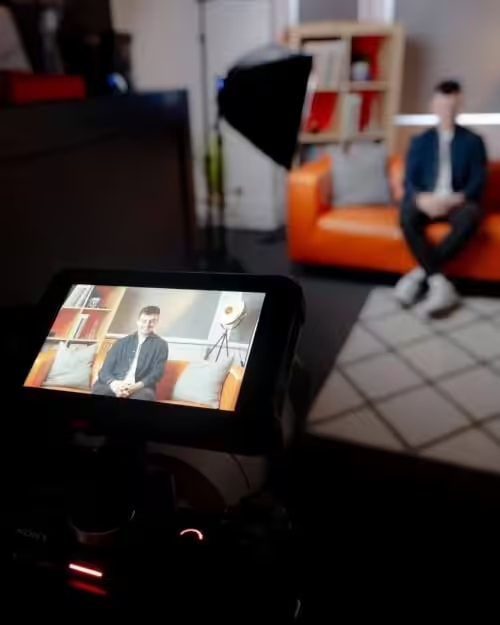
Most testimonial videos feel like hostages reading scripts. A customer sits in front of a camera, mumbles something vague about a "great experience", and the whole thing gets buried on page four of the website.
The difference between a testimonial video that converts and one that gets skipped comes down to specificity. A customer saying "we cut our onboarding time from three weeks to four days" gives viewers a concrete outcome to anchor their decision on, whilst generic praise like "great product" does nothing.
Landing pages with video testimonials convert 62% better than those without, according to recent data from Eyeview Digital. The format matters as much as the content.
A smartphone-recorded reaction serves a different purpose than a produced multi-camera interview. Knowing which format matches your goal saves both time and budget.
We've analysed conversion data across different testimonial video formats. From customer interviews to before-and-after transformations to unscripted reactions, the patterns are clear.
This article breaks down what actually makes testimonial videos work. We'll get into which elements drive conversion rates, how to structure them, where to place them, and which production choices matter.
Why testimonial videos work so well
Video testimonials convert because they show real people delivering trust signals your prospects can see, hear, and feel. Written reviews can't match the emotional weight of a customer speaking directly to camera about results they've achieved.
Social proof and trust signals
When someone watches a testimonial video, they're picking up dozens of micro-signals text can't deliver. Facial expressions, vocal tone, body language, and the speaker's environment all feed into a rapid trust calculation happening in the viewer's brain.
Consumers consistently trust testimonials over brand marketing. That trust jumps higher with video testimonials because faking enthusiasm on camera is nearly impossible.
A written review might be fabricated. A video testimonial showing a real person in their actual office, speaking candidly about specific results, carries weight that written customer testimonials struggle to match.
The social proof mechanism works faster with video. Prospects see someone who looks like them, works in a similar role, or faces the same challenges. That instant recognition triggers a psychological shortcut: if it worked for them, it'll probably work for me.
Emotional impact compared to written testimonials
Video testimonials create emotional connections that written formats can't replicate. When a customer's voice breaks talking about the relief they felt after solving a painful problem, that moment registers viscerally with viewers facing the same struggle.
We've seen conversion rates lift when customer testimonial videos replace text blocks on landing pages. The difference isn't just format. It's that video carries emotional proof alongside factual proof.
A written line stating "This saved me 10 hours per week" conveys information. The same person saying those words on camera, with visible excitement and relief, conveys transformation. Logic makes people think. Emotion makes them act.
The difference between seeing and reading customer feedback
Reading a testimonial asks prospects to imagine the speaker and decide whether to believe the words on screen. Watching a video removes that cognitive load entirely.
Customer testimonial videos show the office, the team, the actual product in use. When a client mentions "300 workflows consolidated into one source of truth" whilst pointing at their screen, viewers see proof rather than just reading a claim.
Email campaigns including video testimonials often see improved open rates and click-through rates. Landing pages with testimonial videos above the fold tend to convert better than pages relying solely on written customer testimonials.
The numbers reflect a simple truth: seeing beats reading when trust is on the line.
The key elements of high-converting testimonial videos
The difference between a testimonial video that drives leads and one that gets skipped comes down to four specific elements. We've seen conversion rates jump when these components work together properly.
Authenticity over polish
We've watched businesses reject perfectly good customer testimonial videos because the lighting wasn't professional or the audio had a slight echo. That's backwards.
The testimonial videos that actually convert feel like real conversations. When someone records a video on their phone in their office or home, viewers trust it more than a heavily scripted production with perfect lighting and makeup.
We've seen DIY testimonial videos from customers outperform studio-shot content by a significant margin. This doesn't mean you should aim for poor quality, though.
Basic good practices still matter. Clear audio, steady camera work, and decent framing all help.
What you don't need is a film crew, teleprompter, or heavily edited cuts that make the whole thing feel like an advert. The fastest way to kill trust is to script every word.
When testimonial videos sound rehearsed, people notice. They stop watching.
Let your customers speak in their own words, even if they stumble or pause. Those natural moments make the story believable.
Specific results over vague praise
"They were great to work with" tells a potential customer nothing useful. "We launched three weeks early and saw enquiries double in the first month" tells them everything.
The video testimonials from customers that drive conversion rates include real numbers. Revenue increases, time saved, specific problems solved.
When a customer says "we reduced admin time by 12 hours per week", that's a detail someone in the same situation can evaluate. We ask customers to describe what their situation looked like before, what changed, and what specific outcomes they saw.
That structure gives viewers the information they need to make a decision. Generic statements about quality or service don't.
Customer stories work when they include context. If you're selling to finance directors, you need testimonial videos that mention budget impact, ROI, or cost savings.
If you're targeting operations managers, you need talk of efficiency, time, or process improvements. The best testimonial videos we've produced include at least two specific metrics or outcomes.
That level of detail separates real proof from marketing fluff.
Relatable storytelling
People connect with stories that mirror their own experience. When someone watching a testimonial video thinks "that's exactly where we are right now", you've got their attention.
This is why showing the customer's background matters. A two-person startup and a 200-person business face different challenges.
When potential customers see someone like them in a testimonial video, they're more likely to believe the results apply to their situation. We structure customer testimonial videos around a simple narrative.
Here's where we were, here's what we tried that didn't work, here's what changed, and here's where we are now. That arc keeps people watching because they want to know how the story ends.
The emotional element matters too. If a customer talks about the stress they felt before finding a solution, or the relief when something finally worked, that resonates.
But it needs to come naturally from the story, not as a forced emotional beat.
Clear context and customer background
A testimonial video that starts with "this product is amazing" without explaining who the customer is or what they do creates more questions than it answers. Context comes first.
We open with basic information. Who is this person? What's their role? What kind of organisation do they work for?
That takes maybe 10 seconds but it frames everything that follows. When viewers know they're watching a finance manager at a mid-sized manufacturer, they can assess whether the experience is relevant to them.
The problem the customer faced needs equal clarity. What wasn't working? What had they tried before? Why did they start looking for a solution?
These details help potential customers self-select. If the problems match, they'll keep watching.
Testimonial videos convert when viewers can see themselves in the story. That requires enough context to make comparisons.
Industry, company size, specific challenges, and measurable outcomes all contribute to that picture.
Structuring testimonial videos for maximum impact
The structure of a testimonial video determines whether someone watches to the end or clicks away after ten seconds. A clear story arc, natural delivery, and the right questions transform vague praise into proof that drives decisions.
Problem to solution to result: story arcs that sell
Every customer testimonial video needs three parts: what was broken, what fixed it, and what changed.
The problem anchors the story. A customer describing their situation before your product creates a reference point that makes the after state meaningful.
When someone from Sandler Training says they spent hours on manual data entry, viewers who face the same problem pay attention. The solution part should be brief.
The customer explains why they picked your product and what happened during implementation. This is not where you list features.
It is where the customer describes the decision and the transition. Results need numbers.
A statement like "we cut onboarding time from three weeks to four days" converts better than "things got faster". Testimonial video examples from HubSpot and Slack consistently include specific metrics because vague outcomes do not persuade anyone.
The before-and-after format uses this structure visually. Peloton's member stories show the sedentary before state, then the active after state with concrete data: pounds lost, classes completed, miles ridden.
According to Wyzowl's research, before-and-after testimonial videos tend to outperform standard interviews.
Interview techniques and natural delivery
Authentic delivery beats polished scripts. The best video testimonials feel like a conversation, which means the person needs to speak naturally rather than recite prepared lines.
Ask open questions and let people talk. Questions like "what was happening before you found us?" or "what changed after you started using this?" produce fuller answers than yes-no questions.
Film for 20 to 30 minutes and edit down to 90 to 180 seconds. Most people relax after the first few minutes, so the best material comes later in the conversation.
Keep the interviewer off camera. The viewer should focus on the customer, not the person asking questions.
We ask questions, wait for complete answers, and stay quiet during pauses. People often add the most valuable detail after a moment of silence.
One camera and a lavalier microphone work fine. Production quality matters less than what the person says and how they say it.
Wistia's data shows that well-produced interview testimonials retain viewers far better, which beats most marketing content.
Natural light or simple lighting setups keep the focus on the speaker. Film at the customer's workplace or home when possible.
The environment adds credibility and context that a blank studio background cannot provide.
Using questions that unlock real stories
The questions you ask determine the customer stories you capture. Generic questions produce generic answers.
Questions that work:
- What specific problem were you trying to solve?
- What were you using before, and why did you switch?
- Can you describe what changed after you started using this?
- What measurable results have you seen?
- What would you tell someone considering this product?
Questions that don't:
- Do you like our product?
- Would you recommend us?
- How was your experience?
Comparison questions work well for mid-funnel prospects. When someone explains why they switched from a competitor, they do the evaluation work for the viewer.
Monday.com's switch stories ask customers to describe the differences between their old tool and the new one, and those testimonial videos tend to convert better than general praise.
Ask for specifics when answers stay vague. If someone says "it saved us time", follow up with "how much time?" or "can you give me an example?".
The detail makes the difference between a testimonial that converts and one that gets skipped.
Avoid leading questions. "Our product is great, isn't it?" produces useless footage.
"What surprised you most about using this?" gets real answers.
Production best practices that drive conversions
The difference between a testimonial video that converts and one that gets ignored comes down to three production decisions: who you film, how you film them, and how you edit what you capture.
Choosing the right customers
Pick customers who actually reflect your target market. If you want to attract enterprise clients, a testimonial from a solo founder just won't persuade anyone.
We look for people who can point to real outcomes. Someone who boosted their conversion rate by 32% in three months? That speaks louder than a dozen folks saying "it's really good".
The best testimonial subjects aren't always your biggest clients. A mid-sized customer who's seen clear results can tell a more convincing story than a huge account where your work was just a small piece of a bigger change.
You want customers who can draw a direct line between your service and their success.
Think about the objections you hear most. If prospects worry about setup time, find someone who launched in two weeks. If price is a sticking point, feature someone who can talk about ROI with real numbers.
Filming tips and environments
Film customers in their actual workspace. A marketing director at their own desk or a founder in their office feels genuine.
A sterile conference room or rented studio? That just looks staged.
Natural light works better than complicated lighting. Put your subject near a window and you'll usually get a nicer shot than with fancy kit.
Audio is more important than video quality. Get a decent lapel mic and skip the expensive cameras.
Keep the camera steady and frame it for head and shoulders. Don't fuss over perfect composition.
Let people speak in their own words. Pauses, hesitations, and real speech patterns make testimonials believable.
Usually, one take does the job if you've briefed them properly. Tell them what to cover, then let them tell it their way.
We've seen phone-recorded testimonials outperform slick studio shoots because they feel like a real conversation.
The role of editing and visual cues
Cut out the rambling. Most raw testimonial footage runs long, but your final cut should be 45 to 90 seconds.
Trim to the core message: what problem existed, how you solved it, what changed.
Add captions to every video. Most people scroll with the sound off, especially on mobile.
Use large, high-contrast text that stays up long enough to read.
Include overlays with the customer's name, role, and company. If the company logo is recognisable, add it too.
These details make the testimonial real, not just anonymous praise.
The thumbnail matters. Grab a frame where your customer is smiling and looking at the camera.
Add a text overlay with their biggest result, like "Revenue up significantly in Q1". That beats a generic play button.
Placement and usage: Where testimonial videos convert best
A video testimonial buried in your blog sidebar won't do much. Put it above the fold on a landing page, right before a pricing decision, and you'll see a real impact.
It's all about context and timing. The viewer needs to be ready to decide.
Website homepage and service pages
Homepage placement works when the testimonial tackles the main thing visitors worry about.
We've tested homepage videos just below the hero section, and they grab attention if they answer "why should I trust you with this?"
Service pages see better conversion lifts with testimonial videos than homepages. Data from thousands of A/B tests shows businesses that add video testimonials at key decision points get a median conversion lift of about a third.
Someone on a service page is closer to making a decision than someone just browsing the homepage.
Put the video near pricing info or right above the call to action. Shopify puts customer stories just before the "Start free trial" button.
When we build landing pages, the best spot for testimonials is always within one scroll of the main call to action.
Keep homepage videos under 90 seconds. On service pages, you can go longer if the visitor is already interested.
Landing pages and CTAs
Landing pages with video testimonials convert 62% better than those without, according to Eyeview Digital's 2025 conversion study.
The testimonial sits between your headline promise and the action you want. It becomes part of the argument.
The best setup puts the video after you explain what you offer, but before you ask for contact details or payment.
Slack's landing pages use this: problem statement, product explanation, customer testimonial with specific results, then the call to action.
Testimonial videos on landing pages should match the traffic source. If you're running ads about reducing onboarding time, the testimonial should mention onboarding time in the first 15 seconds.
Monday.com's comparison testimonials get 2.4 times higher conversion rates than their general ones because they match what people are searching for.
Click-through rates go up when the thumbnail shows a real face.
Auto-play hurts conversion rates. Let visitors choose to watch.
Social media and email campaigns
Testimonial videos on social media play by different rules.
Chewy's user-submitted reaction videos get over five times more shares than their produced marketing content. The video is the whole message, designed to stand alone.
Keep social videos under 60 seconds. The first three seconds matter most.
Start with the result or the strongest statement, then fill in the details.
Email campaigns work best when testimonial videos come in the middle of a nurture sequence, after initial interest but before the purchase decision.
We've seen clients use short clips in week-three emails to prospects who visited a service page but haven't enquired yet.
Video in email increases click-through rate, but put the actual video on a landing page. Use a thumbnail and play button in the email that links out.
Trying to embed video files in email tanks deliverability and doesn't work everywhere.
Real-world testimonial video examples and results
We've worked with dozens of clients making customer testimonial videos. The data shows the format you pick changes how people respond, and specific production choices really do affect conversion rates.
Short case studies from Rubber Duckers clients
We made a series of testimonial videos for a legal software provider who needed to prove their platform could handle complex case management.
Their written testimonials weren't moving prospects.
We filmed three customers, each talking for about 90 seconds.
One solicitor described cutting case file prep from four hours to 45 minutes. Another explained how the software let a three-person firm take on more clients without hiring.
The landing page conversion rate improved after we added the videos. Bounce rate dropped too.
For an e-commerce client selling cycling accessories, we caught unscripted reactions as customers opened their first orders.
The videos ran 15 to 25 seconds and went on Instagram and product pages.
Average order value went up 18% on product pages with customer stories. The Instagram posts got over four times more shares than standard product posts.
Before and after video testimonial outcomes
A fitness coaching client asked us to film transformation testimonials with six members.
We shot the "before" footage during their first week, then came back three months later for the "after" segment.
Each video showed the member's starting weight, energy, and fitness routine, then cut to their results: weight loss, strength gains, habit changes.
One member went from struggling with a 5K run to finishing a half marathon.
The before and after customer testimonials outperformed standard interviews. Cost per acquisition dropped by £34 across paid social campaigns.
We used the same idea for a skincare brand. Customers filmed their skin at the start and again after eight weeks.
We edited the footage into 60-second videos with narration from each customer.
Conversion rates on product pages improved. Return rate dropped, probably because customers had a clearer sense of what to expect.
Different formats and what worked
We tried three video formats for a SaaS client selling project management tools. First, the standard customer interview.
Next, a peer comparison video where someone talked through switching from a competitor. The third approach was a social proof montage with short clips from eight different customers.
The peer comparison video did best with prospects already checking out other options. Click-through to the pricing page jumped compared to the usual interview.
The montage pulled in more attention at the top of the funnel. People watched more of it on average, while the longer interviews only held viewers for longer.
New trial signups from the montage landing page cost less to acquire. That’s a big difference if you’re counting pennies.
For a B2B manufacturing client, we shot a four-minute case study. It followed the customer’s problem, the decision process, implementation, and then the results: a significant drop in production errors and six-figure annual savings.
That single testimonial video lives on a resource page that now sees steady traffic a month. It converts well above the site average.
Sales teams send the link out during the consideration stage. Prospects who actually watch it are 2.4 times more likely to book a demo.
Add us as a preferred source on Google.
If this article has been useful, let us know!
Book a free intro call to talk through your needs.